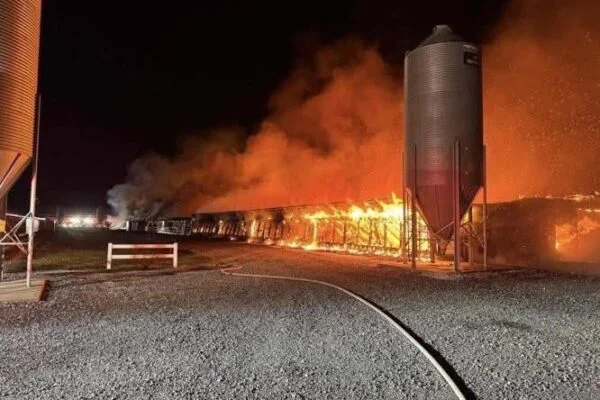
A catastrophic fire has swept through a residential area, leaving at least 300 homes damaged or completely destroyed and sending shockwaves through the local community. The blaze, fueled by unusually strong winds and parched conditions, moved with alarming speed, engulfing entire neighborhoods in mere hours and forcing residents to flee with little notice.
Early reports from emergency services indicate that the fire’s full scale is still being assessed. However, preliminary estimates suggest widespread destruction, with entire blocks reduced to smoldering rubble and many families displaced. Firefighters and first responders have been working around the clock, battling extreme heat, heavy smoke, and unpredictable flames to contain the inferno and safeguard lives.
Eyewitness Accounts Highlight the Chaos
Residents who survived the fire describe harrowing scenes as walls of fire advanced from home to home. One witness recounted watching flames jump across streets, consuming homes with terrifying speed. “It was like nothing I’ve ever seen,” said a resident who asked to remain anonymous. “The fire just moved so fast, and the wind carried embers from house to house. We barely had time to grab a few things before running.”
Another homeowner described the frantic evacuation as sirens blared and emergency personnel directed families to safety. “I could hear the sirens, smell the smoke, and see the fire lighting up the sky,” they said. “It was surreal and terrifying, knowing that everything you’ve worked for could be gone in minutes.”
Emergency Response Efforts
Firefighters have been operating under extremely challenging conditions. High winds and dry vegetation have made containment difficult, while the intense heat and dense smoke have posed serious risks to personnel on the ground. Local authorities deployed multiple firefighting units, coordinated aerial support, and established emergency command centers to manage the crisis.
Evacuation efforts were prioritized to protect residents, many of whom had to leave homes without sufficient time to collect belongings. Shelters were rapidly organized by local government and community organizations, providing temporary housing, food, clothing, and medical assistance to those displaced by the disaster. Volunteers and community members have played a vital role, offering support to families grappling with sudden loss.
Community Impact and Recovery
The emotional toll of the fire has been profound. Families are not only coping with the loss of property but also the psychological impact of sudden evacuation and uncertainty about the future. Local schools, businesses, and community centers have mobilized to provide resources and counseling services to help affected residents process the trauma and begin rebuilding.
Authorities are now working to assess the full extent of the damage, including structural safety, utility restoration, and environmental hazards caused by the blaze. Early estimates suggest that recovery efforts could take months, with rebuilding costs potentially reaching into the tens of millions of dollars.
Environmental Factors Behind the Blaze
Experts have noted that conditions leading up to the fire were particularly conducive to rapid spread. Extended dry spells left vegetation highly flammable, while gusty winds helped propel flames across streets and property lines. Such factors have been linked to an increase in the intensity and frequency of residential fires in the region, raising concerns about preparedness and mitigation strategies for future incidents.
Heroic Efforts and Acts of Kindness
Amid the devastation, stories of heroism and solidarity have emerged. Neighbors risked personal safety to assist elderly residents and children, helping them escape the fire. First responders have been lauded for their tireless efforts, navigating dangerous conditions to contain the blaze and protect lives.
Community members have rallied to support victims, donating essentials, providing shelter, and coordinating relief efforts. Local organizations and volunteers have set up donation centers, while social media campaigns are helping connect those in need with those who can help. These efforts underscore the resilience and compassion of the community in the face of widespread disaster.
Looking Ahead: Recovery and Rebuilding
While the immediate priority has been the safety and well-being of residents, attention is now shifting toward recovery and rebuilding. Authorities are coordinating with insurance companies, contractors, and government agencies to facilitate reconstruction, restore utilities, and provide financial assistance where possible. Mental health resources are also being prioritized, recognizing the long-term psychological effects of experiencing such a traumatic event.
Experts emphasize that rebuilding will require careful planning to ensure that homes and infrastructure are more resilient to potential future fires. This includes measures such as fire-resistant construction, community firebreaks, improved emergency response protocols, and public education campaigns aimed at preparedness.
A Community United in Crisis
The fire has left an indelible mark on the community, but it has also highlighted remarkable resilience and unity. Residents, volunteers, and emergency personnel have come together to support those affected, demonstrating the strength of collective effort in times of crisis.
Though the path to recovery will be long and challenging, the community’s response serves as a testament to human perseverance and compassion. From heroic evacuations to grassroots support initiatives, the shared experience of overcoming adversity has reinforced bonds and provided hope that rebuilding and healing are possible.
As authorities continue to assess the aftermath, it is clear that the impact of this fire will be felt for months, if not years. Yet, amidst the ashes, the courage, solidarity, and determination of those affected offer
Personal Stories Amid the Flames
Amid the chaos and destruction, countless personal stories have emerged, illustrating the human toll of the fire. Families who had lived in the neighborhood for decades watched helplessly as flames consumed their homes. For some, photographs, heirlooms, and personal mementos were lost forever, leaving emotional scars that extend far beyond the physical damage.
One family described frantically evacuating with only the clothes on their backs. “We ran out with our children and our dog, not knowing if we’d ever come back,” said a father, visibly shaken. “It’s heartbreaking to think about all the memories lost in just a few hours.” Another resident recounted how neighbors helped each other carry small possessions out of burning houses, emphasizing a sense of community even amid disaster.
Pets and animals were also caught in the emergency. Local animal shelters and volunteer groups scrambled to rescue displaced pets, providing temporary housing, food, and medical care. Stories of families reunited with their pets after the fire have provided glimmers of hope and relief amid the devastation.
First Responders: Heroes on the Frontlines
The firefighters and emergency personnel working through the night faced extreme conditions. High winds, thick smoke, and the intense heat of the blaze created a hazardous environment. Many responders described scenes that resembled a “wall of fire,” with embers and debris making every advance dangerous.
Captain Michael Rodriguez, a firefighter involved in the response, said, “It was some of the most challenging conditions I’ve ever seen. We knew we had to save lives first, and property second. Our team worked non-stop, rotating shifts, and sometimes even risking our own safety to get residents out.”
Paramedics and medical teams were equally stretched, attending to minor injuries, smoke inhalation cases, and stress-related medical issues among evacuees. Coordination among fire departments, police, and emergency medical services proved crucial to maintaining order and ensuring that as many people as possible were safely evacuated.
Community Relief and Volunteer Efforts
In the immediate aftermath of the fire, the local community came together to provide support to displaced families. Shelters were established in schools, churches, and community centers, offering temporary accommodation. Volunteers delivered meals, clothing, and essential supplies to families who had lost nearly everything.
Local organizations, businesses, and individuals launched donation drives to help those affected. Social media became a hub for coordinating relief efforts, connecting donors with families in need. Several fundraising campaigns were started, raising thousands of dollars within days to support rebuilding and emergency assistance.
“I never realized how strong our community is until now,” said one resident helping at a shelter. “People are showing up, not just to donate, but to sit with families, listen to their stories, and offer comfort. That kind of support is invaluable.”
Environmental and Long-Term Implications
Experts warn that fires of this magnitude are likely to increase in frequency due to climate conditions and prolonged dry spells. Dr. Emily Hart, an environmental scientist, explained, “Extended droughts, heatwaves, and high winds create ideal conditions for rapid fire spread. Communities in areas like this need to be prepared for such emergencies, both structurally and in terms of response planning.”
Authorities are now assessing the long-term environmental impacts, including soil erosion, water contamination, and loss of local flora and fauna. Recovery plans will need to incorporate environmental remediation as well as rebuilding infrastructure.
Mental Health and Emotional Recovery
The psychological impact on residents cannot be overstated. Experiencing sudden loss, displacement, and the threat of danger can lead to post-traumatic stress, anxiety, and depression. Mental health professionals have been deployed to provide counseling and support for adults and children alike.
Local schools are implementing trauma-informed care programs to help children process their experiences, while community centers offer workshops and support groups for adults coping with loss. Experts stress the importance of emotional recovery alongside physical rebuilding, noting that long-term resilience depends on both.
Preparing for the Future
In the wake of the fire, discussions about preparedness have intensified. City planners and emergency officials are evaluating zoning regulations, building codes, and fire mitigation strategies to prevent similar disasters in the future. Measures under consideration include creating firebreaks, using fire-resistant construction materials, and developing rapid alert systems to facilitate quicker evacuations.
Residents are also encouraged to prepare individual emergency plans, including evacuation routes, emergency supply kits, and contingency plans for pets and valuables. Community education campaigns are planned to raise awareness about fire risks and proper response strategies.
A Community United
Despite the devastation, the fire has highlighted the resilience and solidarity of the affected community. Residents, volunteers, and first responders have come together in extraordinary ways to support one another. Acts of kindness, shared resources, and collective problem-solving demonstrate that even amid destruction, the strength of community prevails.
From heroic rescues to volunteer-led shelters, the response showcases the power of collective action. While rebuilding homes and infrastructure will take months or even years, the unity and compassion displayed provide hope that the community will emerge stronger, more prepared, and more connected than ever before.
a powerful reminder that communities can endure and ultimately rebuild stronger than before.