My name is Naomi Keller. I’m thirty-four, and I learned something painful far later than I should have: some families don’t resent you because you take too much from them. They resent you because your presence reminds them how much they’ve been taking from you all along.
For three years, the beginning of every month looked exactly the same.
I would open my banking app, stare at the same transfer, and press send.
$3,000 — Mom (Household Support)
It started after my father died, when the mortgage on our small house outside Cleveland suddenly became a crisis instead of a bill. My mother cried at my kitchen table and said she didn’t want to lose the house. My brother Brent sat on the couch scrolling through his phone like the conversation had nothing to do with him.
I was the one who said, “I’ll help.”
At the time, it felt like the right thing to do. I had a solid remote job in cybersecurity consulting. The money was good, the work was steady, and I told myself this arrangement would only last until things stabilized. Until Mom adjusted. Until Brent got serious. Until the shock of losing Dad softened into something manageable.
But things never stabilized.
They just got comfortable.
Brent never became grateful. He became entitled. He treated my monthly transfers the way people treat oxygen—something invisible, constant, and too ordinary to acknowledge.
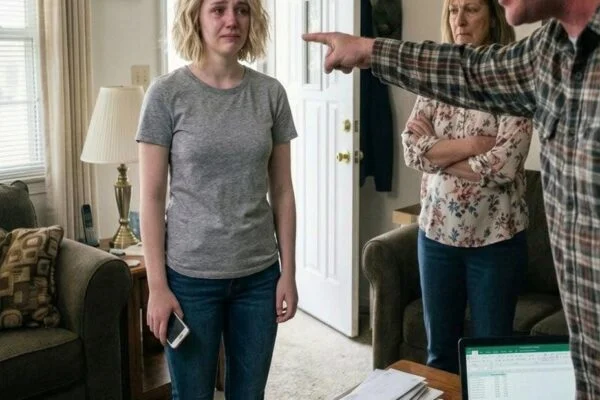
Then one Sunday, I came home from a work trip and found my suitcase sitting in the hallway.
Brent stood there with his arms crossed, chin raised, wearing the kind of smug expression people get when they mistake audacity for authority.
“You can’t keep living here,” he said. “You’re thirty-four. It’s pathetic.”
I stared at him, certain I’d misheard.
“Brent,” I said slowly, “I pay the mortgage.”
He laughed. Loudly. Cruelly.
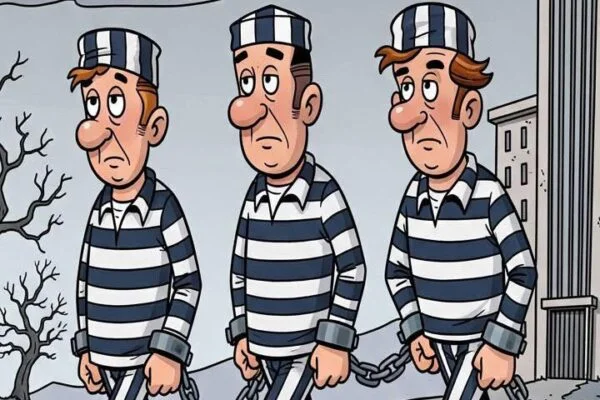
“Yeah, because you’re a parasite,” he said. “You cling to this house so you can pretend you’re needed.”
The word hit harder than it should have. Maybe because it was so absurd. Maybe because part of me knew immediately that no one in that house was going to defend me.
My mother appeared behind him, wringing her hands, her eyes darting between us.
I waited.
I waited for her to say, Stop. I waited for her to tell him he had crossed a line. I waited for her to remind him who had been keeping the roof over his head.
Instead, she said, “Naomi, please don’t start a fight. Brent’s stressed.”
Stressed.
I looked at her and felt something cold move through me.
“He just called me a parasite,” I said quietly.
Her voice tightened. “You always make things worse.”
That was the moment everything became painfully clear.
Brent could insult me, dismiss me, take from me, and still be protected because he was the son who stayed. I was the daughter who paid. My value existed only in what I provided, not in who I was.
My throat tightened, but I kept my voice even.
“So you’re choosing him.”
She said nothing.
She didn’t have to.
I went to my room, packed one bag, left my keys on the counter, and walked out without another word.
No speech. No threats. No announcement that the money would stop.
Just silence.
Two weeks later, I boarded a plane to Lisbon with a one-way ticket and my laptop in my backpack. My company had offered me a transfer to the European office months earlier, and I had said no because of family.
This time, I said yes.
I didn’t post about it. I didn’t tell them where I was going. I didn’t leave a forwarding address.
I disappeared.
And the strangest part was, they didn’t notice at first.
Because when people are used to your support, they don’t feel your absence immediately.
They feel it when the money stops.
The first call came on the second day of the month at 9:03 in the morning. My mother’s name flashed across my phone while I sat at a café table in Lisbon with coffee cooling beside me. I let it ring.
Then the messages started.
Naomi, did you forget the transfer?
It’s not showing. Please fix it.
Brent says the bank must be glitching.
A glitch.
I stared at the word and almost laughed.
Not a single message asking if I was alright. Not one asking where I was. They weren’t looking for me.
They were looking for the money.
By noon, Brent texted me for the first time in months.
Send the money. Don’t be dramatic.
No hello. No apology. No shame.
I didn’t answer.
That evening, my mother called again, and this time I picked up.
The second she heard my voice, panic rushed in.
“Naomi! What’s happening? The mortgage is due!”
My tone stayed calm. “I’m not in Ohio.”
There was a beat of silence, then confusion sharpened into anger.
“What do you mean?”
“I moved,” I said. “I’m living abroad.”
Her breath caught. “You can’t just leave!”
I looked out at the narrow Lisbon street, at sunlight on old stone and strangers passing without knowing my name, and realized how absurd that sentence sounded after everything that had happened.
“I can,” I said. “Because Brent kicked me out.”
She rushed to defend him immediately.
“He didn’t kick you out. He just needed space.”
I let the silence sit between us for a moment.
“He put my suitcase in the hallway,” I said. “And you stood there and let him.”
Her voice turned sharp. “You’re punishing us.”
“No,” I replied. “You made your choice. I’m making mine.”
Then she reached for the oldest weapon in the family arsenal.
“But we’re family.”
I smiled without humor.
“Family doesn’t call the person paying the bills a parasite.”
There was a pause. Then her tone softened into pleading.
“Brent didn’t mean it. He’s under pressure. Just send this month, and we’ll talk.”
There it was. The real request dressed up as reconciliation.
I shook my head even though she couldn’t see me.
“I won’t send it.”
Her breathing turned ragged. “Then we’ll lose the house!”
The ache in my chest surprised me, but it didn’t move me.
“Then Brent can get a job that covers it,” I said. “Or you can downsize.”
“You know Brent can’t—”
And there it was again. The story she had repeated for years. Brent was fragile. Brent was overwhelmed. Brent needed understanding. I was stable, so I was expected to absorb the cost of everyone else’s chaos.
I ended the call gently.
The next few days were a cascade of consequences.
The account Brent had access to overdrafted when the mortgage payment failed. Late fees appeared. Utility warnings followed. Insurance lapsed. Property tax notices started arriving. Brent tried to patch things together with cash advances and bad decisions, but you can’t build stability out of denial.
By the end of the week, my mother’s calls no longer sounded angry.
They sounded scared.
One voicemail stayed with me.
“We didn’t know it was all you,” she whispered.
I closed my eyes when I heard it.
Not because it hurt.
Because it confirmed what I already knew.
They had never wanted to know. Knowing would have demanded gratitude. Gratitude would have demanded accountability. And accountability would have forced them to look at the truth of how they had lived.
Two months later, my mother emailed me with the subject line: PLEASE.
Inside, she wrote that they were behind, that Brent was trying, that things were falling apart faster than expected. She asked if I could help with just one payment.
I read the message three times.
I didn’t feel triumphant. I felt tired. There was still a part of me—small, stubborn, embarrassing—that wanted my mother to finally choose me.
But Lisbon had taught me something already.
Peace is cheaper than panic. Boundaries cost less than betrayal.
So I replied with one sentence:
I’ll help you find options. I won’t be the option.
That weekend, we had a video call. On my terms. I made the rules clear: if Brent insulted me, I’d hang up. If they demanded money, I’d end the conversation.
They agreed.
Brent looked thinner and angrier, the kind of angry that comes from finally being forced to face consequences. My mother looked older.
“We just need time,” she said quickly. “Brent will find something better.”
I asked one simple question.
“How many jobs has he applied to this week?”
Brent’s face darkened. “I’m not your employee.”
I nodded. “Then I’m not your sponsor.”
Silence.
I shared my screen and walked them through the only real options left—refinancing, downsizing, assistance programs, selling before foreclosure, and building a budget based on reality instead of wishful thinking.
Brent scoffed. “So you’re really not sending anything.”
I looked at him steadily.
“No. Because you called me a parasite while living off me.”
My mother flinched.
“He didn’t mean—”
I stopped her with one sentence.
“Stop excusing him. That’s why nothing changes.”
They had expected me to return as a softer version of the same solution. They thought guilt would reopen the same door I had quietly closed.
It didn’t.
Three weeks later, they sold the house. Not for as much as they might have gotten with better planning, but enough to clear the debt and avoid foreclosure. My mother moved into a modest condo. Brent moved into a shared apartment and took a job he would once have dismissed as beneath him.
He blamed me, of course.
People like Brent always blame the person who stops cushioning the fall.
But one evening, my mother called, and her voice was different.
“I’m sorry,” she said. “I made you the responsible one because it was easier.”
I didn’t forgive her right away. Real forgiveness doesn’t arrive just because someone finally says the right words. But I told her the truth.
“I needed you to protect me,” I said. “Not use me to protect the house.”
After that, things changed slowly.
We spoke more, carefully, cautiously. I visited once, later, on my own terms. Brent stayed distant. That suited me just fine.
Because Lisbon taught me something else too.
Distance is not always abandonment.
Sometimes, it’s recovery.
The biggest surprise in all of this wasn’t that they struggled when the money stopped.
It was what happened to me after I left.
I started sleeping through the night. I stopped checking my phone with dread. I built friendships that weren’t tied to obligation. I dated someone who asked about my day and didn’t need anything in return.
For the first time in years, the money I earned served the one person who had always come last.
Me.
And that was the lesson I should have learned long before those monthly transfers became routine:
If your love is only noticed when it’s paid for, it isn’t love. It’s dependence.
And if someone calls you a parasite while feeding on you, the insult was never yours to carry.
I left the country.
They called it abandonment.
I called it survival.