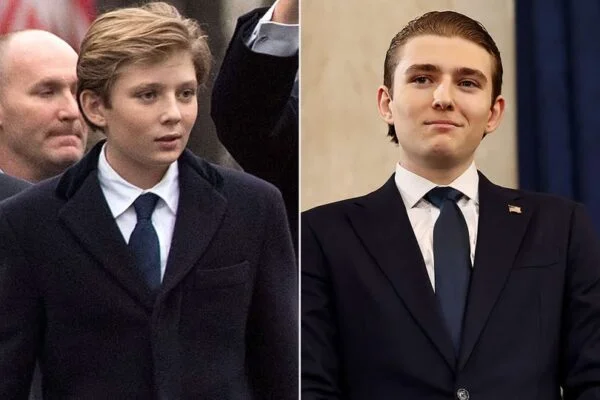
Turning 18 is a milestone for any young person. It marks the transition from adolescence into adulthood—a time of reflection, possibility, and self-definition. For Barron Trump, this transition carries unique weight. As the youngest son of Donald Trump and Melania Trump, Barron has grown up under intense public scrutiny, navigating a childhood unlike that of most of his peers.
Despite assumptions often made about children born into political dynasties or considerable wealth, Barron’s upbringing appears to have been shaped by deliberate efforts to provide structure, privacy, and a sense of normalcy. As he steps into adulthood, public curiosity about his future continues to grow. Yet the more compelling story is not about headlines or speculation—it is about how a young man matures while living in the spotlight.
This article explores Barron Trump’s upbringing, education, family influences, and the broader context of growing up in a high-profile political family. It aims to provide a thoughtful and balanced perspective, focusing on verified information and avoiding sensationalism.
A Childhood Shaped by History
Barron William Trump was born in 2006 in New York City, entering a family already well known in business and media circles. His father, Donald Trump, was a real estate developer and television personality long before entering politics. His mother, Melania Trump, built a successful modeling career prior to becoming First Lady.
Barron’s early years were spent in Manhattan, where he lived primarily at Trump Tower. Reports during his childhood often noted that Melania was deeply involved in his daily life, emphasizing structure, discipline, and educational development.
When Donald Trump won the 2016 presidential election, Barron was ten years old. The move from New York to Washington, D.C., marked a significant shift. For the first time in modern history, a First Lady delayed moving to the White House so her son could complete his school year—an indication of the family’s focus on continuity in his education.
Education in Elite Institutions
Barron attended several respected educational institutions during his childhood and adolescence. He began at Columbia Grammar & Preparatory School in New York, later enrolling at St. Andrew’s Episcopal School in Maryland during his father’s presidency.
After leaving Washington, he continued his studies at Oxbridge Academy in Florida. These institutions are known for academic rigor and emphasis on personal development.
Observers frequently noted Barron’s reserved demeanor at public appearances. Unlike many teenagers who might seek attention, he largely avoided interviews and maintained a low public profile. This discretion aligned with Melania Trump’s public statements emphasizing privacy for children in political families.
His graduation in 2024 quietly marked the completion of his secondary education—an important milestone following years of national and international attention.
The Influence of Melania Trump
Throughout Barron’s upbringing, Melania Trump has often been described as his strongest advocate and anchor. As First Lady, she maintained a focused public agenda but consistently shielded her son from unnecessary exposure.
Melania’s European heritage also played a role in Barron’s cultural upbringing. Born in Slovenia, she reportedly encouraged multilingual development. Barron is said to have been exposed to English and Slovenian at home, with additional language instruction included in his education.
The emphasis on manners, discipline, and privacy reflects Melania’s stated parenting philosophy: that children should grow up grounded, regardless of their family’s prominence.
In interviews, she has described motherhood as her primary responsibility, often prioritizing Barron’s well-being over public engagements.
Growing Up Under Public Scrutiny
Few teenagers experience the level of visibility Barron has known. From televised political rallies to White House ceremonies, his presence has occasionally drawn commentary from media outlets and online platforms.
Public figures’ children often face unique challenges, including intense scrutiny, speculation about their personalities, and unsolicited opinions about their futures.
Yet, in Barron’s case, there has been relatively limited direct public commentary from him. Unlike other members of the Trump family, he has not maintained active social media accounts nor participated in political messaging.
This absence has fueled curiosity—but it has also preserved a degree of autonomy. Silence, in some respects, has been a protective boundary.
The Balance Between Privilege and Responsibility
Being born into wealth and influence carries advantages—access to quality education, travel, and networks. However, it also comes with expectations and pressures.
Public interest in Barron’s life often reflects broader societal fascination with political families. The weight of a recognizable surname can open doors, but it can also invite criticism.
As he enters adulthood, Barron faces the same universal question confronting many 18-year-olds: What path will he choose?
Will he pursue business, following in his father’s early footsteps? Will he explore public service, entrepreneurship, or perhaps an entirely different field?
While speculation abounds, only time will reveal his chosen direction.
Privacy as a Form of Strength
One notable aspect of Barron’s public presence is its rarity. In an era dominated by social media visibility, choosing—or being guided toward—privacy can be a deliberate act of self-preservation.
Many experts on child development emphasize the importance of allowing adolescents to form identities independent of parental reputation. For children of public figures, this process is especially complex.
By maintaining a limited media footprint, Barron appears to have been afforded space to mature outside constant commentary.
This strategy reflects broader discussions about ethical media practices regarding minors in political families. Across party lines, many commentators agree that children should be shielded from partisan critique.
A Crossroads Moment
Turning 18 legally signifies adulthood in the United States. It grants new rights and responsibilities, from voting eligibility to independent decision-making.
For Barron Trump, this milestone carries symbolic resonance. He has spent much of his life observed but not heard. Now, as an adult, he has the agency to define his public presence—if he chooses to engage at all.
Crossroads moments often prompt reflection: What values have shaped me? What aspirations guide my future?
Observers who have interacted with Barron in academic settings have described him as polite, intelligent, and composed. While these accounts remain anecdotal, they align with the emphasis on discipline described by his mother.
Navigating a Polarized Environment
Growing up in a politically divided climate adds another layer of complexity. The Trump name evokes strong opinions across the political spectrum.
For young adults in similar circumstances, separating personal identity from public narrative can be challenging. Psychologists often note that establishing autonomy is critical for healthy development.
Barron’s next steps—whether academic or professional—will likely be closely watched. However, maintaining focus on personal growth rather than public expectation may be key to navigating such visibility.
Education and the Next Chapter
As of his graduation, reports suggest Barron is considering higher education options. The choice of college or career path often signals the beginning of independent adulthood.
Higher education provides not only academic advancement but also exposure to diverse perspectives. For someone raised in a highly visible political environment, this experience could offer valuable opportunities for intellectual and social exploration.
Regardless of institution or field, the transition from structured schooling to self-directed goals marks a pivotal phase.
Public Curiosity and Responsible Reporting
Public interest in prominent families is not new. From political dynasties to entertainment icons, the next generation often attracts attention.
However, responsible coverage focuses on factual milestones rather than speculation. As Barron becomes an adult, maintaining respect for his autonomy is essential.
Speculative headlines suggesting dramatic revelations often misrepresent quiet milestones. In reality, reaching adulthood is less about sudden admissions and more about gradual self-definition.
The Role of Family Support
Family support systems significantly influence young adults navigating complex environments. By many accounts, Melania Trump has remained a steady presence in Barron’s life.
Strong parental guidance during formative years can instill resilience and perspective.
Regardless of political alignment, most observers can agree that parenting under public scrutiny presents unique challenges. The balance between visibility and protection requires intentional effort.
Defining an Independent Identity
Ultimately, adulthood is about authorship—writing one’s own narrative.
For Barron Trump, independence may involve charting a course distinct from both political and media expectations.
He may choose public engagement or private enterprise. He may pursue higher education domestically or abroad. The possibilities are wide-ranging.
What remains consistent is the importance of defining identity beyond headlines.
Broader Reflections on Public Figures’ Children
Barron’s story also prompts broader reflection on how society treats children of public figures.
Children do not choose their parents’ careers or public roles. Granting them space to mature without excessive commentary fosters healthier civic culture.
As Barron enters adulthood, observers may benefit from shifting focus from speculation to acknowledgment of a universal truth: every young adult deserves the opportunity to grow, learn, and define their own path.
Conclusion
At 18, Barron Trump stands at a pivotal moment—no longer a child observing from the sidelines, yet not fully defined by any singular role.
His upbringing combined visibility and intentional privacy, privilege and discipline. Guided by parental influence, shaped by elite education, and tempered by public scrutiny, he now has the opportunity to determine his future direction.
Rather than dramatic revelations, his milestone represents something more meaningful: the quiet transition into adulthood.
In a world often driven by sensational narratives, the more grounded story is one of personal growth, family support, and the universal journey of self-discovery.
Time will reveal what path Barron chooses. For now, his 18th year symbolizes possibility—a chapter still unwritten.